Why flor de lis guatemala city restaurant belongs on a luxury itinerary
For couples planning a high end stay in Guatemala, the flor de lis guatemala city restaurant is the rare table that justifies reshaping an itinerary. In a city better known for traffic than for romance, this restaurant in the revitalised Cuatro Grados Norte district quietly ranks among the best restaurants in Latin America for narrative driven fine dining. Set within Casa del Águila in Zona 4, Flor de Lis turns an evening meal into a choreographed dining experience that feels as considered as any design forward hotel suite.
The restaurant sits in a former industrial pocket of Guatemala City that now hums with galleries, cocktail bars and experimental restaurants, so couples can pair dinner with a slow walk through a neighbourhood that finally feels made for pedestrians. Inside the restaurante Flor de Lis space, lighting is low, tables are generously spaced and the chef table faces an open kitchen where the team plates each dish with quiet precision. For travellers used to luxury hotels, the atmosphere will feel familiar yet distinctly Guatemalan, with volcanic stone, warm wood and a wine pairing list that leans into both European classics and emerging Latin America producers.
Flor de Lis is led by chef Diego Telles, whose training at Noma and Mugaritz shows in the way he treats every ingredient, from humble corn to rare cacao, as a narrative tool. The restaurant offers a single course tasting journey that has evolved from eight courses to a twelve course tasting menu, each plate echoing a chapter of the Popol Vuh, the sacred Maya book of creation. Reservations are strongly recommended for dinner, since the room holds only around twenty two guests and Guatemala City’s dinner culture tends to start around 19.00, with the best tables going first.
The Popol Vuh on a plate: how the menu becomes a creation story
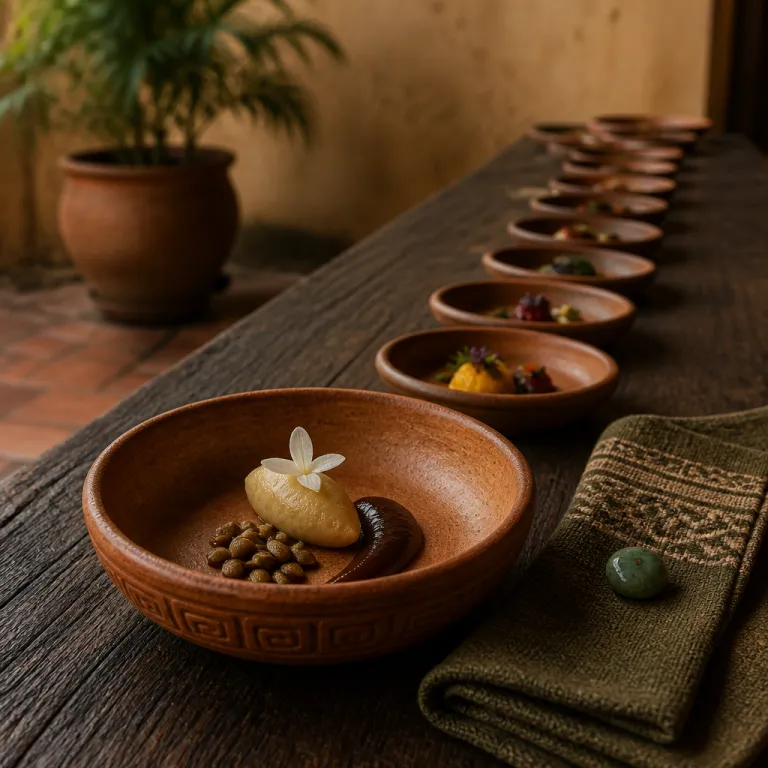
At this flor de lis guatemala city restaurant, the menu is not a list of dishes but a script that follows the Popol Vuh from primordial darkness to humans shaped from corn. The first course tasting sequence often opens with something almost austere, a minimal bite that evokes still water and silence, before moving into plates that layer smoke, char and sauce to suggest the birth of mountains and the first forests. By the time a corn focused dish arrives, guests understand why Guatemalan culture sees maize not just as food but as the very material of humanity.
One course might reinterpret a street food snack from Antigua Guatemala, another might reference the underworld trials of the hero twins with a bitter cacao element and a deep, almost obsidian coloured reduction. Throughout the tasting menu, ancestral ingredients such as pepitoria, achiote, hierba santa and beans appear in modern guises, sometimes as delicate foams, sometimes as intense oils brushed onto the plate con a painter’s care. The effect is less theatrical gimmick and more fine dining as quiet storytelling, where each dish feels anchored in Guatemala’s highland markets and volcanic soils.
Wine pairing is optional but thoughtfully calibrated, with lighter whites and skin contact wines early on, then structured reds and aged spirits as the narrative darkens. Couples staying in luxury properties in Antigua often ask whether it is worth the forty five minute drive Guatemala City for dinner, and for this restaurant the answer is unambiguous. For travellers already exploring elevated kitchens such as Atxa, where charcoal and fire define the philosophy, Flor de Lis offers the complementary pole of Guatemalan fine dining, where mythology and memory lead the way.
From cornfields to Casa del Águila: ingredients, sourcing and technique
What sets the flor de lis guatemala city restaurant apart for serious diners is the way it treats sourcing as carefully as any luxury hotel treats linen thread counts. Chef Diego Telles works closely with local farmers and artisans across Guatemala, bringing in corn, beans and squash that reflect the Mesoamerican trinity at the heart of Guatemalan food culture. In his kitchen at Casa del Águila in Zona 4, those ingredients meet modern tools, from dehydration ovens to precision temperature baths, without losing their connection to the fields.
One course might feature a single variety of native corn prepared three ways, another might pair a delicate fish with a sauce built from toasted pepitoria and bright hierba santa, echoing flavours you might taste in a family comedor yet refined to a near architectural clarity. The restaurant’s approach to cacao, coffee and seasonal fruit aligns closely with the country’s broader gastronomic calendar, making it a smart complement to a stay timed around the harvests explored in this guide to cacao and coffee pairing with summer stays. Throughout the menu, the kitchen balances acidity, smoke and texture in a way that feels recognisably Guatemalan while still speaking the global language of fine dining.
For couples used to chef table experiences in other parts of Latin America, the techniques at Flor de Lis will feel familiar yet freshly applied to this specific terroir. Liquid nitrogen might appear in one course, but it will be in service of a story about mist over a highland lake, not a random flourish. Even the bread service, often overlooked in city Guatemala restaurants, becomes a quiet homage to maize, served with cultured butter and a deeply savoury reduction del aguila that nods to the building’s name.
Zone 4, Antigua and beyond: planning your trip around the table
Luxury travellers often anchor their Guatemala itinerary around Antigua’s cobbled streets and volcano views, then treat Guatemala City as a necessary transit point rather than a destination. Flor de Lis flips that logic, turning an overnight in the capital into a highlight for couples who care as much about a tasting menu as about a pool. If you are staying in a high end property in Antigua Guatemala, the drive Guatemala City takes roughly forty five minutes outside peak traffic, making a dinner reservation at this restaurant a realistic and rewarding excursion.
One elegant strategy is to book a final night in a premium city hotel, schedule a late afternoon arrival, then head to Casa del Águila in Zona 4 for the full twelve course tasting menu and wine pairing. Guatemala City’s dinner rhythm starts around 19.00, so an early seating allows time to stroll the surrounding streets, where galleries, cafés and other restaurants have transformed the once industrial zona into a cultural corridor. Couples who have already sampled charcoal driven cooking at Atxa or explored the impact of Michelin style recognition on properties such as Casa Palopó and Villa Bokeh will appreciate how Flor de Lis represents a different, more introspective face of Guatemalan hospitality.
For longer trips, consider pairing a city Guatemala stay with a few slow days on Lake Atitlán, using a retreat such as Loma de Atitlán as a base for a solo reset or a quiet couple’s interlude between urban dining sprints. From there, you can loop back through Antigua, tasting street food at the market by day and reserving fine dining tables by night, creating a rhythm that moves between casual comedores and award winning restaurants. Throughout, Flor de Lis remains the narrative anchor, the place where the Popol Vuh, cornfields and city lights meet at a single table.
Inside the room: what the dining experience actually feels like
Walking into the flor de lis guatemala city restaurant, you notice the calm first, then the quiet choreography of the team. Seating is limited to around twenty two guests, so even when every table is full the room never feels crowded or rushed. Smart casual dress fits the tone, and couples who enjoy lingering over a wine pairing will appreciate that the staff never push the pace.
The chef table offers the most immersive vantage point, with a direct line of sight to chef Diego Telles and his brigade as they plate each dish with almost meditative focus. Service follows a polished yet warm rhythm, with servers explaining how each dish connects to a specific passage of the Popol Vuh, from the primordial waters to the moment humans are formed from corn. At some point in the evening, someone will likely remind you that “What is the Popol Vuh?” and “What type of cuisine does Flor de Lis offer?” are questions that matter here because “A sacred Maya text recounting creation myths and history.” and “Contemporary Guatemalan cuisine inspired by Maya mythology.” are the twin pillars of the restaurant’s philosophy.
Expect the full course tasting to last between two and a half and three hours, especially if you opt for the wine pairing that traces its own arc alongside the food. Couples who prefer a quieter corner can request a table slightly away from the chef table, while those who enjoy conversation with the team might ask to sit closer to the pass. By the time dessert arrives, often a playful yet restrained riff on cacao or tropical fruit, the city outside feels distant, and the restaurant has become its own small universe of light, flavour and story.
How Flor de Lis fits into Guatemala’s wider fine dining landscape
For travellers using myguatemalastay.com to curate a luxury circuit through Guatemala, the flor de lis guatemala city restaurant sits at the apex of narrative driven dining. Where some of the best restaurants in the country focus on opulent rooms or panoramic views, this restaurant focuses on the intellectual and emotional resonance of each dish. That makes it particularly appealing for couples who see dinner as the main event rather than a prelude to nightlife.
Within Guatemala City, Flor de Lis stands out among restaurants for its commitment to the Popol Vuh as a guiding text, rather than a loose inspiration. In contrast, Atxa leans into fire, smoke and the primal appeal of the grill, offering a different but complementary expression of Guatemalan fine dining that many guests choose to experience on separate nights. Together, they show how a single city can host both mythology driven tasting menus and charcoal centred kitchens, giving food focused travellers a reason to extend their stay.
Across Latin America, only a handful of restaurants attempt this level of cultural storytelling through food, which is why Flor de Lis has attracted international attention as an award winning address. For couples planning a trip that already includes lakeside retreats, cacao farm visits and market tours, anchoring one evening here ensures that the flavours of Guatemala cohere into a single, memorable narrative. Long after you leave the chef table at Casa del Águila, it is the taste of corn, the echo of the Popol Vuh and the quiet confidence of this dining experience that will define how you remember the country.
FAQ
What is the Popol Vuh and why does it matter at Flor de Lis ?
The Popol Vuh is a sacred Maya text that recounts creation myths and the early history of the Maya people. At Flor de Lis in Guatemala City, the entire tasting menu is structured around this narrative, moving from primordial waters to humans made from corn. Each course references a specific moment or theme from the text, turning dinner into a cultural and culinary journey.
Who is chef Diego Telles at Flor de Lis ?
Chef Diego Telles is the head chef of Flor de Lis and trained in influential European kitchens such as Noma and Mugaritz. His cooking at this Guatemala City restaurant blends indigenous Guatemalan ingredients with modern techniques, including elements of molecular gastronomy. That background allows him to translate the Popol Vuh into a refined tasting menu without losing the soul of traditional flavours.
What type of cuisine does Flor de Lis serve ?
Flor de Lis serves contemporary Guatemalan cuisine that draws heavily on Maya mythology and local ingredients. The restaurant focuses on a multi course tasting menu where corn, beans, squash, cacao and native herbs appear in highly refined preparations. Diners can expect a fine dining experience that feels rooted in Guatemala rather than a generic international style.
How far is Flor de Lis from Antigua and is the drive worth it ?
The drive from Antigua Guatemala to Flor de Lis in Guatemala City typically takes around forty five minutes outside peak traffic. Many luxury travellers staying in Antigua choose to make the trip specifically for the twelve course tasting menu and wine pairing. For couples who value ambitious restaurants and cultural storytelling, the journey is widely considered worthwhile.
Do I need a reservation and what is the dress code ?
Reservations are strongly recommended at Flor de Lis because seating is limited and the restaurant offers a single, carefully paced tasting menu. The dress code is smart casual, which suits the elegant yet relaxed atmosphere of the dining room. Booking ahead also allows the team to accommodate dietary preferences within the structure of the Popol Vuh inspired courses.