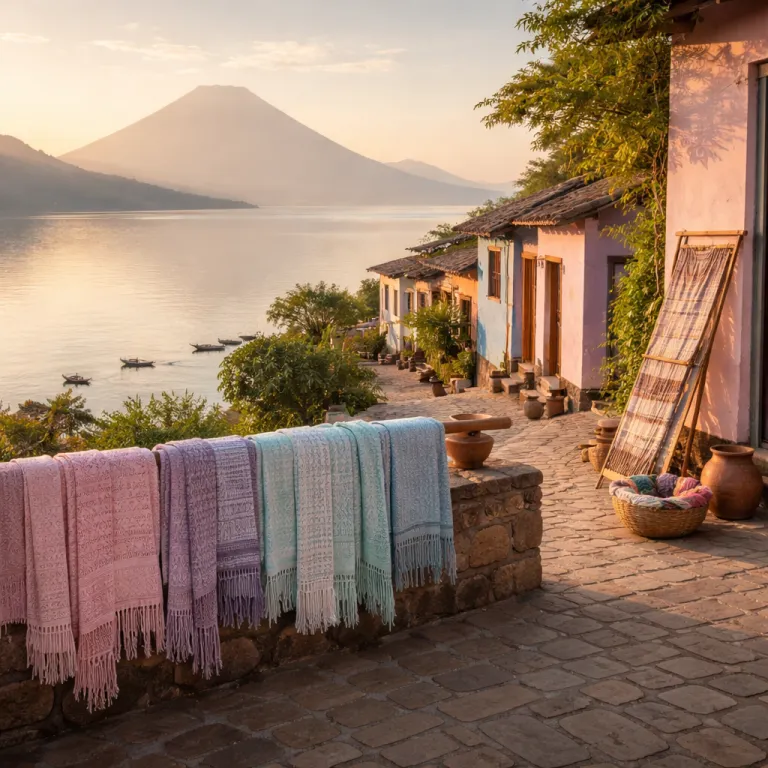
Why santa catarina palopo textile belongs at the start of your trip
Santa Catarina Palopó sits on a quiet curve of Lake Atitlán, a small village where color is not decoration but language. For a solo traveler staying at Casa Palopó or another luxury property around the lake basin, a morning focused on Santa Catarina Palopó textiles is the most revealing way to understand how Guatemalan hospitality and heritage intersect. Once you have walked the steep lanes of this lakeside settlement and watched Kaqchikel Maya women work the backstrap loom, every textile you see in Guatemala feels less like a souvenir and more like a story.
The town of Santa Catarina Palopó is not just another painted village on the shores of Lake Atitlán. It is the source community for a specific set of geometric patterns that now appear on cushions in luxury suites from Antigua to Guatemala City, and on scarves in curated shops in nearby Panajachel and San Antonio Palopó. When you understand how these patterns travel from a tuk tuk ride above the village to a polished lobby in Central America, you start to read the country through thread, not just through ruins and volcanoes.
Most guests arrive at Lake Atitlán thinking of boat tours and volcano hikes, yet the Santa Catarina Palopó weaving tradition offers a quieter, deeper entry point. In this town the painted houses, the blue and turquoise walls from the Pintando el Cambio project, and the traditional huipil that local women wear are all part of the same visual system. Spending time here first gives you a reference for every later market in Guatemala, from the stalls in Panajachel to the more curated spaces in Antigua, and it anchors your luxury stay in something genuinely local rather than imported design trends.
Arranging an unhurried morning from casa palopó or nearby hotels
Casa Palopó sits just above Santa Catarina Palopó, with terraces that look straight across Lake Atitlán to the volcanoes and down to the painted village below. From this vantage point you can see tuk tuk taxis tracing the curves of the road, pickup truck beds carrying sacks of corn, and the blue geometry of Pintando el Cambio wrapping the town in color. The hotel’s concierge is your best ally for arranging a Santa Catarina Palopó textile visit that respects the rhythm of local women rather than your camera roll.
Ask the team to connect you with a cooperative of Kaqchikel Maya women weavers in Santa Catarina Palopó, such as Asociación de Mujeres Tejedoras de Santa Catarina, not a generic craft stop that appears on every lake circuit. Aim to leave the hotel by tuk tuk or by hotel vehicle around eight thirty, when the light is soft and the village streets are still mostly filled with schoolchildren and women heading to work. This timing lets you arrive before the day’s heat, and before the town shifts into a more transactional mode as boats from Panajachel and San Antonio begin to arrive.
Etiquette matters in a small town where around five thousand people share steep lanes and close courtyards. Dress modestly, ask before taking photos, and let conversations about weaving and design lead naturally to any purchases rather than opening with prices and bargaining. Plan to spend at least two hours in the village, which gives you time to walk past the painted houses, visit a weaving patio, and sit quietly by the lake where the geometric patterns of the huipiles echo the ripples on the water.
Inside the backstrap loom: how technique shapes every pattern you see
In Santa Catarina Palopó, the heart of the textile tradition is the backstrap loom, a simple yet demanding tool that ties the weaver’s body directly to the fabric. Kaqchikel Maya women anchor one end of the loom to a post or tree and the other around their waist, so every movement of the torso controls tension and the emerging cloth. The methods used here include backstrap loom weaving and single-faced brocading, with cotton and synthetic threads now sitting side by side on the same warp.
When you sit on a low stool in a shaded courtyard and watch local women work, time slows to the rhythm of the shuttle passing back and forth. You begin to see how each line of geometric patterns is not printed or painted but patiently counted, lifted, and laid in with supplementary weft threads that create raised motifs on the surface. A weaver from a local cooperative might pause to explain that a huipil is a traditional blouse worn by indigenous women, that Santa Catarina Palopó textiles are made using backstrap looms and brocading techniques, and that cotton and synthetic threads are combined to balance durability, color, and cost for visitors and export.
This technical specificity changes how you move through every hotel in Guatemala that uses Guatemalan textiles as part of its design language. A cushion in Casa Palopó’s lounge, a runner in a lakeside suite near Panajachel, or a wall hanging in a refined property in Central America stops being anonymous décor once you have seen the labor behind each motif. You understand why the traditional craft remains central to economic support in the village, and why increased tourism and global recognition can be both opportunity and pressure for the women who keep the loom work alive.
Reading patterns by village: palopó, santiago and san antonio compared
One of the most useful skills you can bring home from Lake Atitlán is the ability to read patterns by village, rather than treating every Guatemalan textile as interchangeable. In Santa Catarina Palopó, the dominant palette leans toward blue and turquoise, echoing the lake and the painted houses of the Pintando el Cambio project that has turned the town into a living mural. The geometric patterns here often feature stylized birds and abstracted lake motifs, and they appear on huipiles that local women wear as well as on table runners and shawls aimed at visitors.
Travel a short boat ride along the lakeshore to Santiago Atitlán and you will see a different visual language, with heavier use of earthy tones and more figurative birds and flowers in the weaving. Continue to San Antonio Palopó and the textiles shift again, with patterns that reflect that town’s own history and its relationship to the lake environment. Understanding this pattern-by-village logic means that when you browse markets in Panajachel or in Guatemala City, you can recognize whether a piece truly reflects Santa Catarina Palopó textile heritage or borrows motifs from elsewhere.
For luxury travelers, this knowledge turns shopping into a form of cultural literacy rather than accumulation. You can ask a hotel in Central America where its textiles were sourced, and whether the pieces in your room come from Santa Catarina Palopó, from Santiago Atitlán, or from San Antonio Palopó, and that question alone signals respect for local artisans. It also helps you support the specific communities whose work you admire, whether that is the blue-forward aesthetic of Santa Catarina or the denser embroidery of other villages around Lake Atitlán.
What to buy, what to skip and why this morning outshines tikal as an opener
In a village where tourism and weaving are tightly linked, thoughtful buying is part of responsible travel. Focus first on pieces that are central to Santa Catarina Palopó’s textile identity, such as a huipil woven by Kaqchikel Maya women or a table runner that clearly carries the blue and lake-inspired geometric patterns of the town. Ask whether an item was woven locally or imported from another region of Guatemala, and be prepared to pay a fair price that reflects the time and skill involved.
Consider skipping mass-produced items that feel disconnected from the traditional vocabulary of the village, even if they carry the word Palopó on a tag. Instead, look for work sold directly by local women in small cooperatives or family patios, where your quetzales go straight into the community’s textile economy. Many travelers overlook smaller pieces such as backstrap-woven belts or cushion covers, yet these often translate best into modern homes and luxury hotel suites, and they are easier to carry than a full huipil in a pickup truck or tuk tuk on the way back to your base.
This kind of morning, anchored by Casa Palopó or another refined property near the village, can be a stronger opening to Guatemala than flying straight to Tikal. You begin your stay not with ruins but with living culture, with a direct relationship to women who are preserving heritage while generating income through their craft. For more context on how luxury properties across Guatemala work with artisans and structure guest experiences, you can read our in-depth guide to insights from hoteliers and luxury hotel booking practices in Guatemala, which situates Santa Catarina Palopó textiles within the broader hospitality landscape of Central America.
How hotels can frame santa catarina palopo textile with integrity
For a luxury or premium hotel, integrating Santa Catarina Palopó textiles into the guest experience is not just a design choice but an ethical one. Properties like Casa Palopó, perched above the town, are perfectly placed to act as bridges between guests and local artisans, ensuring that visits to the painted village and its weaving patios are respectful and mutually beneficial. By partnering with local cooperatives rather than anonymous middlemen, hotels can help sustain cultural identity while offering guests rare access to the creative process.
Thoughtful framing starts with language and logistics, from how a concierge describes the visit to how much time is allocated in a guest’s itinerary. A rushed thirty-minute stop between lake tours reduces Santa Catarina Palopó to a backdrop, while a carefully planned morning that includes walking through the Pintando el Cambio streets, sitting with weavers, and understanding the role of textiles in Kaqchikel Maya life turns the experience into a highlight. Hotels can also commission custom pieces that reflect the traditional patterns of Santa Catarina Palopó, crediting the specific cooperative in room materials so guests know whose work they are enjoying.
Across Guatemala and Central America, the most compelling properties are those that treat local women artisans as partners rather than props. When a guest sees the same blue motifs from the shores of Lake Atitlán on a cushion in their suite, and then meets the woman who wove them in a small courtyard in Santa Catarina Palopó, the line between hospitality and heritage dissolves in the best possible way. That is the promise of Santa Catarina Palopó textiles when handled with care: a stay that feels both luxurious and grounded, threaded directly into the life of the village.
FAQ
What makes santa catarina palopo textile different from other Guatemalan textiles ?
Santa Catarina Palopó textiles are closely tied to the Kaqchikel Maya community living on the slopes above Lake Atitlán. The work is characterized by backstrap loom weaving and single-faced brocading, with a strong emphasis on blue tones that echo the lake and the painted houses of the village. Motifs often include stylized birds and abstract lake forms, which distinguish them from the more figurative designs of nearby villages.
Where should I buy textiles in Santa Catarina Palopó as a hotel guest ?
The most meaningful purchases usually happen in small cooperatives or family patios within the village, rather than in generic stalls that serve quick tour groups. Ask your hotel, especially if you are staying at Casa Palopó or another property near the lake area, to arrange a visit with a recognized group of local women weavers. Buying directly from them ensures your money supports the community that maintains the Santa Catarina Palopó textile tradition.
How much time should I plan for a weaving visit in the village ?
Plan at least two to three hours in Santa Catarina Palopó if you want more than a superficial look. This allows time to walk through the Pintando el Cambio streets, sit with Kaqchikel Maya women as they work the backstrap loom, and ask questions about patterns and materials. A slower pace also shows respect for the weavers’ schedule and makes the experience feel less like a photo stop.
Can I visit Santa Catarina Palopó independently, or do I need a guide ?
You can reach the village independently by boat from Panajachel or by road from other Lake Atitlán towns, and the streets are easy to navigate on foot. However, arranging the visit through your hotel or a trusted local guide often leads to more meaningful encounters with weavers, since introductions matter in a small community. A guide can also help with translation from Kaqchikel or Spanish, especially when discussing technical aspects of the weaving.
Are Santa Catarina Palopó textiles suitable for luxury interiors back home ?
Yes, many pieces from Santa Catarina Palopó adapt beautifully to contemporary interiors, from cushions and throws to framed textile panels. Focus on items with durable cotton warps and clear, well-executed geometric patterns, and ask about care instructions before you buy. Several luxury hotels in Guatemala already use these textiles in suites and public spaces, which can give you ideas for how to integrate them into your own home.